GMP IPO Watch
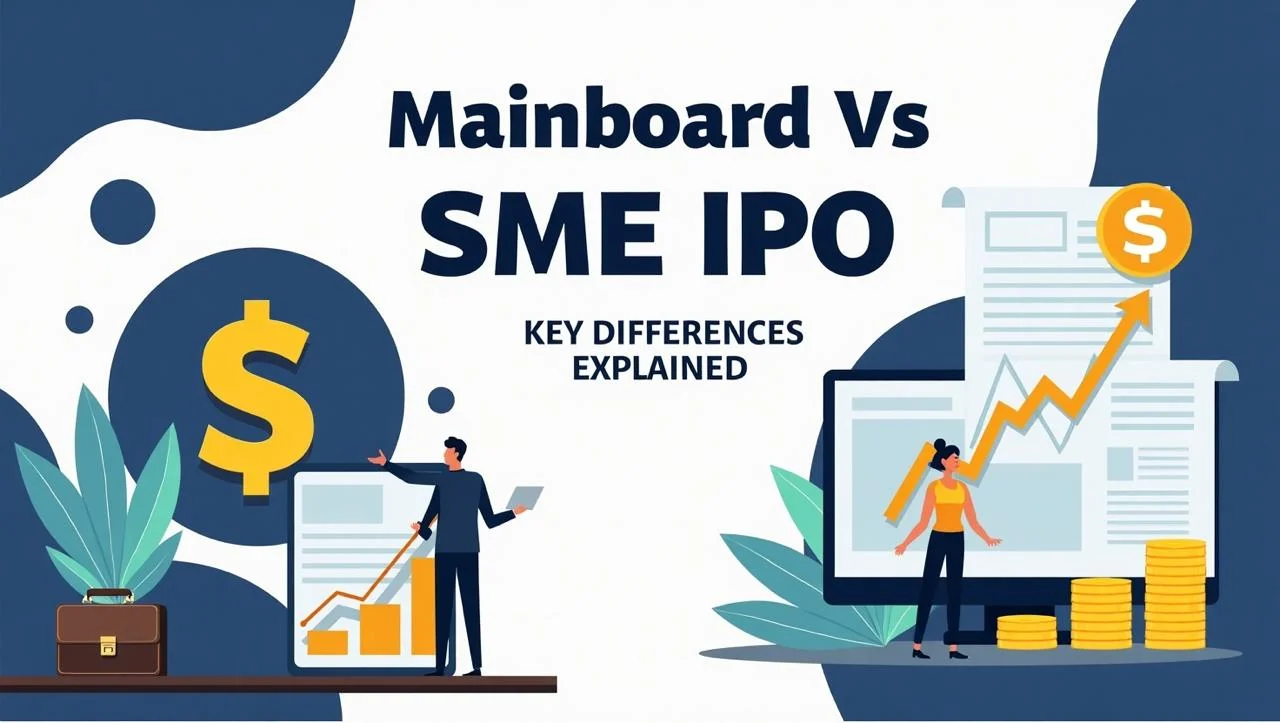
As we move through the first quarter of 2026, the Indian primary market is at a fascinating crossroads. For years, the "Mainboard" was the only playground for serious investors, while the SME (Small and Medium Enterprise) segment was seen as a speculative corner. However, recent data suggests a massive shift in dynamics. While the Mainboard offers stability and institutional backing, the SME segment has become the home of "high-velocity" gains—and equally high risks. For users of gmpipowatch.in, choosing between these two isn't just about the company's size; it’s about understanding two completely different investment philosophies.
The scale of operations is the most obvious differentiator. Mainboard IPOs, like the recent filings from PhonePe or Reliance Jio, involve raising hundreds or thousands of crores. These companies have massive track records, heavy institutional oversight, and are mandatory for long-term portfolio building. On the other hand, SME IPOs are much smaller, often raising between ₹10 crore and ₹100 crore. In 2026, we are seeing a "SME Boom" where companies in niche sectors—like drone tech, specialized agro-chemicals, and AI-driven SaaS—are choosing the NSE Emerge or BSE SME platforms to bypass the rigorous (and expensive) mainboard listing process.
One of the biggest draws of the SME segment in 2026 is the Listing Pop. Historically, SMEs have shown much higher Grey Market Premiums (GMP) relative to their issue price. It is not uncommon to see an SME IPO list at a 100% premium on day one. Because the "float" (the number of shares available) is so small, even a moderate amount of demand can send the price skyrocketing. For a retail investor, a successful allotment in a hot SME IPO can result in a profit that would take years to achieve in a stable Mainboard stock like TCS or HDFC Bank.
However, the "Real Money" in SMEs comes with a significant entry barrier: Lot Size. Unlike Mainboard IPOs, where you can apply for a single lot worth roughly ₹15,000, SME IPOs require a minimum investment of ₹1 lakh to ₹1.4 lakh per application. This "high ticket" entry is designed to keep out casual speculators and ensure that only "informed" investors participate. This means that while the percentage gains are higher, the capital at risk is also substantially larger. If an SME IPO lists at a discount, your absolute loss is much deeper than a Mainboard failure.
In 2026, Liquidity remains the "silent killer" of the SME segment. On the Mainboard, you can sell your shares at the click of a button at almost any time during market hours. In the SME segment, shares are traded in lots. If you want to sell, you must find a buyer for the entire lot. During a market downturn, SME stocks can hit "lower circuits" for days with zero buyers, leaving investors trapped in their positions. This is why many veteran traders on our platform prefer Mainboard IPOs for "safety" and SME IPOs for "surplus" capital only.
The regulatory landscape has also tightened significantly in 2026. SEBI has introduced stricter "Profitability Criteria" for SMEs to prevent "shell companies" from entering the market. Previously, a company could list based on revenue growth alone; now, SMEs must show an operating profit (EBITDA) of at least ₹1 crore in two of the last three years. This has improved the quality of SME issues appearing on gmpipowatch.in, making the "Real Money" play a bit safer than it was in the wild-west days of 2023–24.
On the other hand, Mainboard IPOs in 2026 are increasingly dominated by Qualified Institutional Buyers (QIBs) like Mutual Funds and Foreign Portfolio Investors (FPIs). This institutional presence acts as a "floor" for the price. When you invest in a Mainboard IPO, you are essentially riding the coattails of professional fund managers who have done months of due diligence. While you may not get a 100% listing gain, you are less likely to lose 50% of your capital overnight, which is a very real possibility in the volatile SME space.
The "Migration" Factor is a unique wealth-creation strategy in the SME space. Many companies that list on the SME platform eventually grow large enough to "migrate" to the Mainboard. When this happens, the stock often gets a massive valuation re-rating as it becomes accessible to retail investors who couldn't afford the ₹1 lakh lot price. Investors who identified these "multibaggers" early in their SME stage have seen their wealth multiply tenfold. This is where the truly "Real Money" is made—identifying future Mainboard leaders while they are still small.
For the retail investor, the Allotment Probability is another major factor. Mainboard IPOs are often oversubscribed by 50x to 100x in the retail category, making allotment a literal lottery. SME IPOs, due to their higher entry price, sometimes have lower subscription numbers in terms of the number of applicants, though the monetary subscription is high. For some, the strategy is simple: "I'd rather have a 10% chance of getting a ₹1.2 lakh lot in an SME than a 1% chance of getting a ₹15k lot in a Mainboard."
The sector mix is also changing. In 2026, the Mainboard is full of "Old Economy" sectors—banking, manufacturing, and infrastructure. SMEs, however, are where the "New India" startups are listing. From green hydrogen startups to semiconductor testing labs, the SME platform is the only place to find these high-growth, niche plays. If you believe a specific sub-sector is the future, the SME market is likely where you'll find the pure-play companies.
Ultimately, whether the "Real Money" is in SME or Mainboard depends on your Risk Appetite. If you are looking to build a retirement fund or a stable long-term portfolio, the Mainboard is your bedrock. But if you have an appetite for risk and are looking for aggressive growth, the SME segment offers a path to wealth that is hard to find elsewhere in the Indian market. The key is to use the real-time GMP data and subscription trends here on gmpipowatch.in to separate the "hype" from the "value."