GMP IPO Watch
LEAP India IPO 2026 – A Different Perspective on India's Asset-Light Logistics Industry
India's logistics sector is no longer driven only by transportation and warehousing. Large manufacturers, FMCG companies, retailers and e-commerce businesses are now looking for smarter ways to reduce supply chain costs without making heavy capital investments.
One of the fastest-growing solutions is asset pooling, where companies rent reusable pallets, crates and containers instead of purchasing them. This approach reduces costs, improves operational efficiency and supports sustainability by minimising waste.
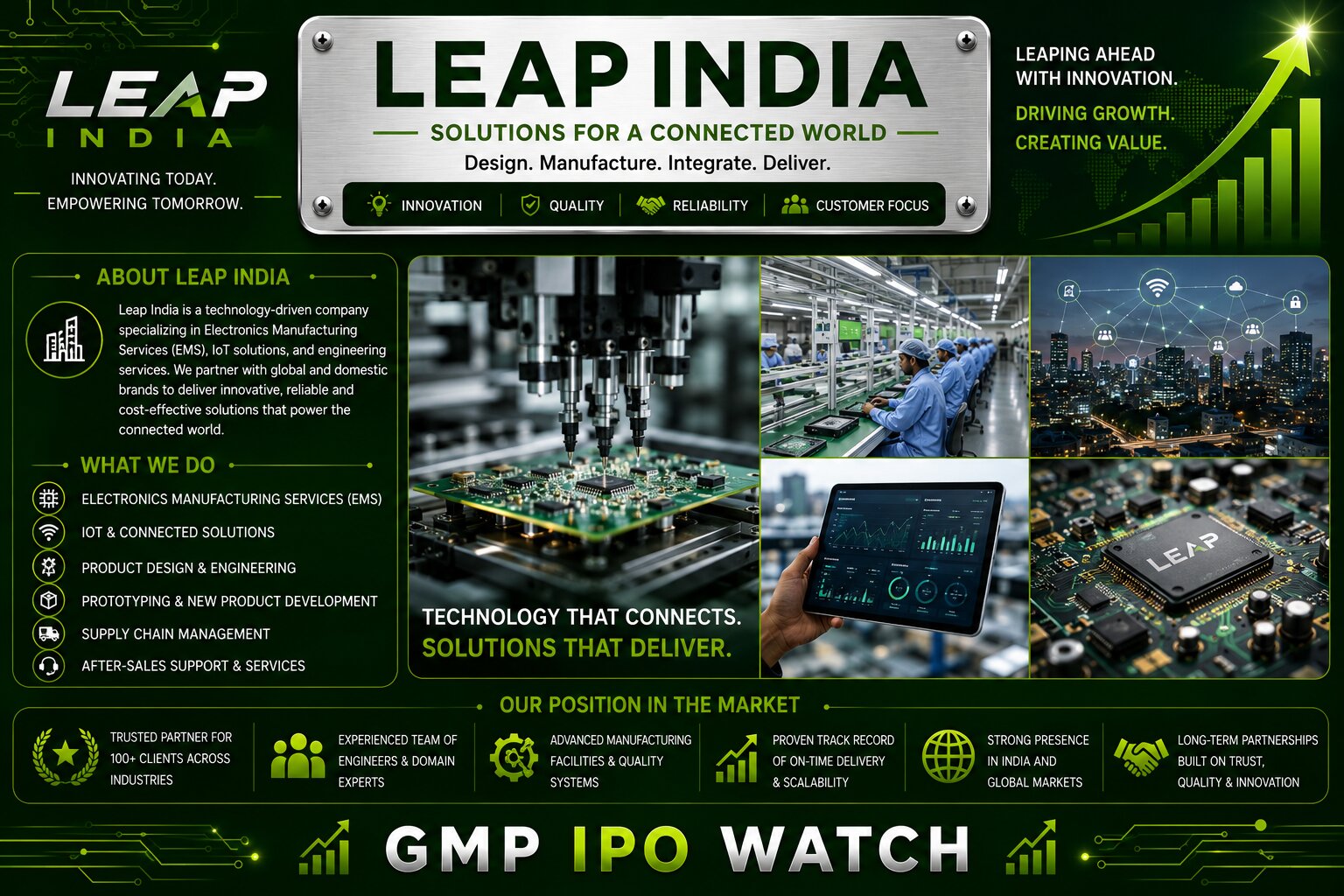
LEAP India Limited has established itself as one of India's leading organised asset pooling companies. Rather than manufacturing consumer products, the company provides reusable logistics assets that move goods safely through warehouses, factories and distribution centres.
With India's supply chains becoming increasingly organised, the demand for reusable logistics infrastructure continues to grow. LEAP India is well positioned to benefit from this transformation through its technology-enabled asset management platform and nationwide operational network.
This article presents a fresh analysis of the business by focusing on logistics efficiency, recurring rental income, reusable packaging, sustainability and long-term growth rather than traditional IPO listing expectations.
About LEAP India Limited
LEAP India operates an asset pooling platform that allows businesses to rent logistics equipment whenever required.
Its core product portfolio includes:
- Wooden pallets
- Plastic pallets
- Foldable large containers
- Intermediate bulk containers
- Plastic crates
- Material handling equipment
- Warehouse mobility solutions
- Returnable transit packaging
The company serves customers across multiple industries including manufacturing, automobile, FMCG, pharmaceuticals, electronics, retail, chemicals and e-commerce.
Instead of selling these assets, LEAP India earns recurring revenue by renting them repeatedly throughout their useful life.
What Is Asset Pooling?
Traditionally, companies purchased their own pallets and warehouse equipment.
This resulted in:
- High capital expenditure
- Low asset utilisation
- Maintenance costs
- Storage expenses
- Asset losses
- Disposal challenges
Asset pooling changes this model completely.
Businesses simply rent the equipment when needed.
Once goods are delivered, the pallets are collected, repaired if necessary and rented to another customer.
This allows a single asset to generate revenue many times during its lifecycle.
Why Businesses Prefer Renting Instead of Buying
Many companies now follow an asset-light business model.
Instead of investing capital in logistics equipment, they prefer renting because it offers:
- Lower upfront investment
- Better cash flow
- Flexible capacity
- Reduced maintenance
- Faster scalability
- Lower replacement costs
This structural shift continues to support long-term demand for organised asset pooling providers.
How LEAP India Generates Revenue
The company's business model is largely subscription and rental based.
Revenue comes from:
- Pallet rental
- Container rental
- Material handling equipment
- Logistics asset management
- Repair and maintenance services
- Supply chain support
- Warehouse asset solutions
Unlike traditional manufacturers that depend on one-time product sales, LEAP India benefits from recurring rental income.
The same pallet can generate revenue multiple times before replacement.
Technology Improves Asset Utilisation
Managing millions of reusable logistics assets requires strong digital systems.
LEAP India uses technology to:
- Track asset movement
- Monitor inventory
- Improve utilisation
- Reduce losses
- Schedule maintenance
- Optimise logistics operations
Higher utilisation directly improves profitability because existing assets generate more rental cycles.
Sustainability Is Becoming a Competitive Advantage
Reusable packaging significantly reduces industrial waste.
Compared with disposable packaging, reusable logistics assets help:
- Reduce wood consumption
- Lower plastic waste
- Minimise landfill disposal
- Improve resource efficiency
- Support ESG initiatives
Many multinational companies increasingly prefer suppliers that support environmentally sustainable logistics.
This trend could become an important long-term growth driver.
LEAP India IPO Details
| Particular | Details |
|---|---|
| IPO Type | Mainboard Book Built Issue |
| Total Issue Size | Approximately ₹2,480 Crore |
| Fresh Issue | ₹480 Crore |
| Offer for Sale | ₹2,000 Crore |
| Price Band | ₹151 – ₹159 |
| Face Value | ₹1 Per Share |
| Listing | NSE & BSE |
The IPO includes both a fresh issue and an Offer for Sale by existing shareholders.
Fresh issue proceeds are expected to strengthen the company's balance sheet and reduce borrowings.
Why Debt Reduction Is Important
Asset pooling businesses require significant investment in physical assets.
Borrowings are often used to purchase:
- Pallets
- Containers
- Warehouse equipment
- Logistics assets
Reducing debt may provide several benefits.
These include:
- Lower finance costs
- Improved profitability
- Better cash flow
- Stronger balance sheet
- Additional borrowing capacity for future expansion
Financial Performance
LEAP India has reported healthy business growth in recent years.
| Financial Year | Revenue | Profit After Tax |
| FY2024 | ₹371.94 Crore | ₹37.17 Crore |
| FY2025 | ₹485.03 Crore | ₹37.56 Crore |
| FY2026 | ₹747.36 Crore | ₹62.34 Crore |
Revenue has almost doubled over the three-year period, while profitability has also improved steadily.
This reflects increasing demand for organised logistics solutions and better asset utilisation.
Customer Industries
LEAP India serves businesses operating across multiple sectors.
These include:
- FMCG
- Consumer electronics
- Automobile manufacturing
- Pharmaceuticals
- Chemicals
- Retail
- Industrial manufacturing
- Logistics service providers
A diversified customer base reduces dependence on any single industry.
Industry Growth Drivers
India's organised logistics sector continues expanding because of:
- GST-led supply chain reforms
- Warehouse automation
- E-commerce growth
- Manufacturing expansion
- Retail modernisation
- Export growth
- Sustainable packaging adoption
As more companies shift toward reusable logistics assets, organised asset pooling providers are expected to benefit.
Competitive Strengths
LEAP India possesses several business advantages.
Market Leadership
One of India's largest organised asset pooling companies.
Nationwide Network
Extensive logistics infrastructure supports customers across India.
Technology Platform
Digital asset tracking improves operational efficiency.
Recurring Revenue
Rental-based business generates stable cash flows.
Diversified Customer Base
Exposure to multiple industries reduces concentration risk.
Sustainable Business Model
Reusable logistics assets align with global ESG trends.
Major Risk Factors
Investors should also evaluate the following risks.
Capital Intensive Operations
Expansion requires continuous investment in physical assets.
Asset Damage
Pallets and containers require maintenance and replacement.
Customer Retention
Loss of large enterprise customers may affect revenue.
Utilisation Risk
Idle assets reduce profitability.
Competition
New entrants may increase pricing pressure.
Economic Slowdown
Reduced industrial production could lower demand for rented logistics assets.
Future Growth Opportunities
The company has several long-term growth opportunities.
- Expansion into new industries
- Warehouse automation
- International partnerships
- Smart asset tracking
- Digital logistics platforms
- Reusable packaging adoption
- Growth in organised retail
- Expansion of manufacturing under "Make in India"
These structural trends could support future business expansion.
What Investors Should Analyse
Before investing, investors should examine:
- Asset utilisation
- Revenue growth
- Operating cash flow
- Debt reduction
- Return on capital
- Customer diversification
- Rental yields
- Capital expenditure
- Working-capital efficiency
Businesses with recurring rental income should be evaluated on cash generation rather than only accounting profits.
Should Investors Consider the IPO?
LEAP India provides investors with exposure to India's modern logistics ecosystem rather than traditional transportation businesses.
Positive factors include:
- Market leadership
- Recurring rental income
- Nationwide operations
- Technology-enabled platform
- Sustainable business model
- Improving financial performance
- Strong industry growth
Investors should simultaneously monitor:
- Debt levels
- Asset utilisation
- Capital expenditure
- Operating cash flow
- Valuation
- Customer concentration
The IPO may appeal to long-term investors seeking exposure to India's organised logistics and supply-chain infrastructure sector.
Final Verdict
The LEAP India IPO 2026 represents an opportunity to invest in one of India's leading reusable logistics asset providers at a time when businesses are rapidly adopting asset-light supply chain solutions.
Its recurring rental model, technology-driven operations, diversified customer base and focus on reusable packaging differentiate it from traditional logistics companies. Strong revenue growth, improving profitability and planned debt reduction further strengthen its long-term business outlook.
However, investors should carefully evaluate capital expenditure requirements, asset utilisation, operating cash flow and valuation before making an investment decision.
Overall, LEAP India offers a unique logistics infrastructure investment opportunity supported by India's expanding organised supply chain industry, while carrying the normal risks associated with a capital-intensive rental business.