GMP IPO Watch
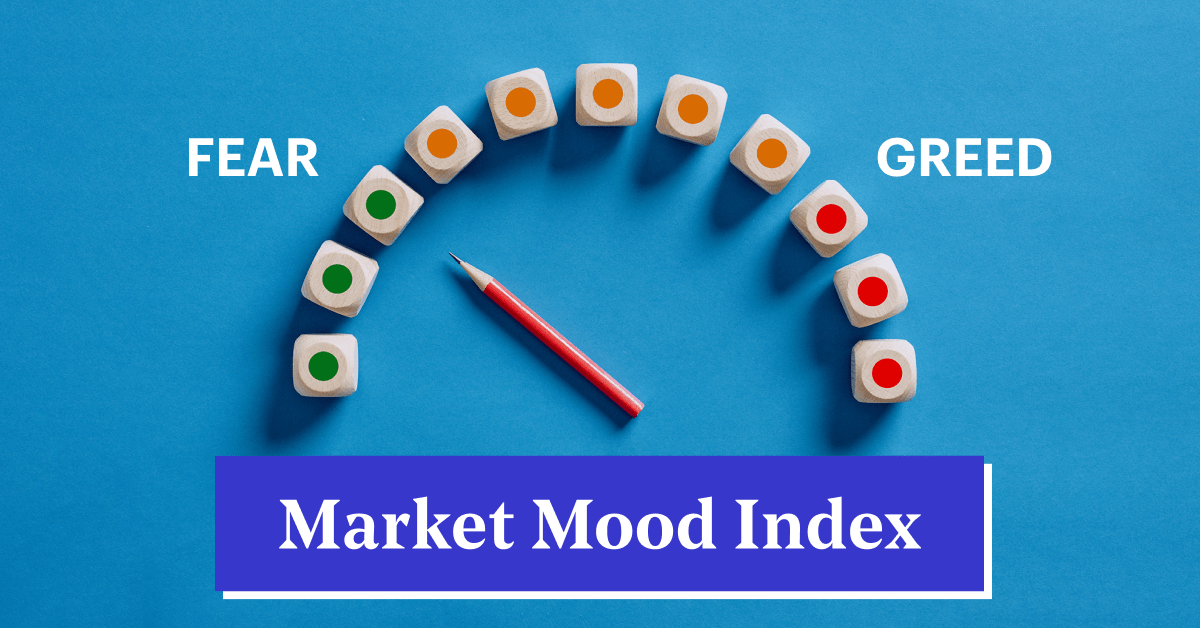
In the fast-paced world of the Indian primary market, three letters carry more weight than almost any financial ratio: GMP. As we navigate the busy IPO season of 2026, Grey Market Premium has evolved from a niche whisper among brokers into a mainstream metric tracked by millions of retail investors. At its core, GMP represents the unofficial premium at which an IPO’s shares are traded in the "grey market" before they officially debut on the stock exchanges. For many, it is the first real signal of whether an IPO will be a "blockbuster" or a "dud" on listing day.
Understanding how GMP is calculated is the first step for any serious trader using gmpipowatch.com. The math is quite simple: if a company like SEDEMAC Mechatronics sets its IPO price at ₹1,352 and the grey market price is hovering at ₹1,852, the GMP is ₹500. This ₹500 represents the "extra" value the market perceives even before the first official trade. It’s a reflection of the classic economic principle of supply and demand; when thousands of investors want a piece of a limited allotment, the premium naturally skyrockets.
However, it is crucial to remember that the grey market in India is unofficial and unregulated. Unlike the SEBI-regulated NSE or BSE, these trades happen through informal networks of dealers based on mutual trust. Because there is no legal oversight, the GMP can be highly volatile. It is not uncommon to see a high GMP on a Monday vanish by Thursday if global market sentiment soured or if the IPO was unexpectedly undersubscribed by institutional buyers. This is why seasoned investors treat GMP as a "sentiment gauge" rather than a guaranteed profit.
One of the biggest factors influencing GMP in 2026 is the Subscription Ratio. There is a direct correlation between how many times an IPO is subscribed—especially in the Retail and HNI (Non-Institutional) categories—and the movement of its premium. When a "mainboard" IPO is oversubscribed 50 or 100 times, it creates a sense of scarcity. This "Fear Of Missing Out" (FOMO) often pushes the GMP higher, as those who didn't get an allotment through the official lottery try to secure shares in the grey market instead.
The year 2026 has also seen a massive surge in SME (Small and Medium Enterprise) IPOs. For these smaller issues, like the recent Elfin Agro India or Srinibas Pradhan Constructions, the GMP can be even more dramatic. Because SME IPOs have smaller lot sizes and lower liquidity, their premiums often represent 50% or even 100% of the issue price. For retail investors, these "multibagger" hints in the grey market are exciting, but they also come with significantly higher risk compared to established blue-chip companies.
Another term you will frequently see on our site alongside GMP is the "Kostak Rate." While GMP tells you the profit per share, the Kostak rate is the profit per application. This is the fixed amount an investor can earn by "selling" their entire IPO application to a buyer before the allotment is even finalized. For example, if you apply for an IPO and sell your application for a ₹5,000 Kostak, you get that money regardless of whether you actually get the shares. This provides a "safety net" for small investors who want to lock in a profit early.
The role of Market Sentiment cannot be overstated. In 2026, we’ve seen that even companies with weak fundamentals can command a high GMP if the overall "Nifty" and "Sensex" are in a bullish phase. Conversely, fundamentally strong companies sometimes debut with a "flat" or "discount" GMP if the global economy is facing headwinds, such as high oil prices or geopolitical tensions. This highlights why an investor should never look at GMP in isolation; it must be balanced with a deep dive into the company's Red Herring Prospectus (RHP).
We often get asked: "Is a high GMP a guarantee of listing gains?" The honest answer is no. While there is a 70–80% correlation between a high GMP and a positive listing, it is not 100%. There have been several instances in the past where a stock had a "grey" premium of 40% but listed at a 5% discount because of a sudden market crash on the morning of the listing. The grey market is a speculative tool, and while it's incredibly useful for mapping "investor mood," it lacks the data-backed certainty of the official exchange.
As an investor using gmpipowatch.com, you should also watch for the "GMP Trend Line." A single day’s GMP isn't as important as whether the premium is rising, falling, or stable. A rising trend indicates that "big money" (HNIs and QIBs) is becoming more confident as the listing date approaches. A falling trend, on the other hand, is a major red flag—it often suggests that large players are offloading their positions or that the initial "hype" is cooling off.
In 2026, technology has made tracking these numbers easier than ever. With real-time updates and community discussions, the "information gap" that once favored only big brokers has been closed. Retail investors can now see the same "unofficial" numbers that the pros use. This transparency has democratized IPO investing in India, allowing even a first-time trader from a Tier-3 city to make an informed decision based on the latest grey market data.
In conclusion, IPO GMP is a fascinating, high-stakes window into the psychology of the Indian stock market. It captures the hopes, fears, and greed of the investing public in real-time. By using the data here on gmpipowatch.com responsibly—treating it as one piece of a larger puzzle that includes financials, sector growth, and management quality—you can significantly improve your chances of capturing those elusive listing gains.